
Residential
Improve the Way Your Home Performs.
Explore spray foam for homes, additions, attics, crawl spaces, rim joists, garages, and more.
Residential ServicesSpray foam insulation for homes, job sites, post-frame buildings, garages, workshops, and specialty projects around Traverse City.
The right insulation approach depends on the building, assembly, access, and project goal.
The most common projects we evaluate around Traverse City, from homes and attics to pole barns, garages, and specialty spaces.
New homes, remodels, additions, targeted upgrades, and residential building-envelope insulation.
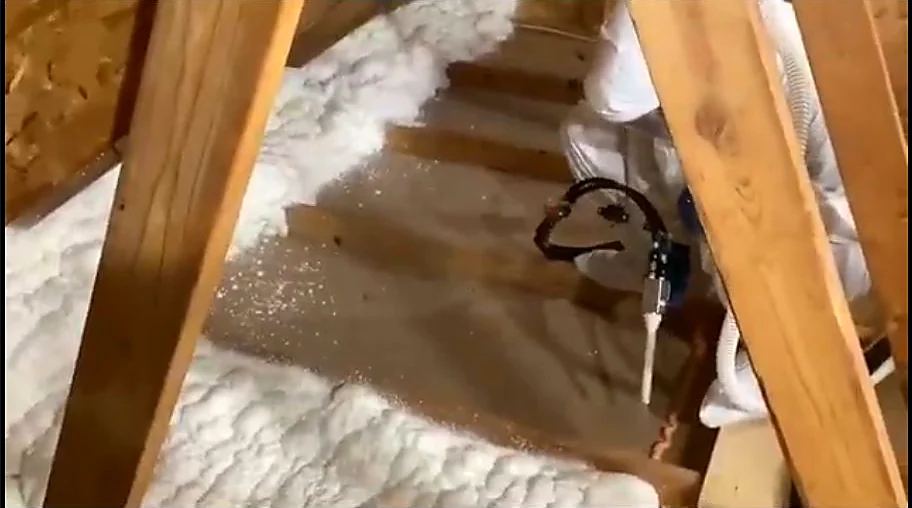
Spray foam insulation for accessible attic-side ceiling applications, planned around the construction, access, project goals, and site conditions.
Target common areas of unwanted air movement around lower building assemblies and framing transitions.
Post-frame buildings, storage spaces, agricultural structures, shops, and conditioned pole barns.
Attached garages, detached garages, heated shops, hobby spaces, and working buildings.
Commercial areas, mechanical spaces, storage buildings, contractor projects, and unique insulation applications.
Choose the path that matches your project.
Explore spray foam for homes, additions, attics, crawl spaces, rim joists, garages, and more.
Residential ServicesScope coordination, jobsite preparation, scheduling, and professional installation for contractor-managed projects.
Contractor ServicesServing Grand Traverse County and communities within roughly an hour of Traverse City.
A closer look at your insulation.
Foam Solutions offers sample-based testing and inspection to support installation quality control and help investigate concerns about existing foam.
Measure the density of representative foam samples and compare the results with the product manufacturer’s specifications.
Use a field pull test to evaluate the foam’s bond to the substrate and observe whether separation occurs at the bond line or within the foam.
Measure installed foam depth at representative locations and document the observed thickness.
Inspect foam samples for cell uniformity, visible voids, and structural irregularities.
Use a photoionization detector (PID) to screen for detectable volatile organic compounds and document conditions at the time of assessment.
Screen the air surrounding a collected foam sample in a separate sample chamber under documented conditions.
The scope is selected for the project, with measurements and observations documented alongside the assessment conditions and limitations.
Tell us what you are insulating and send the measurements or project details you have.